“Partnerships are fundamental to SOF and to all our missions and endeavors. We now benefit from unparalleled integration with our Allies and partners, the interagency community, and the Joint Force strengthened over decades and honed particularly over the past two decades of global operations.”
-USSOCOM Posture Statement, 2023
Introduction
The United States’ most significant advantage against its adversaries in the competition space is its allies and partners, who have become more vulnerable to adversarial influence. U.S. allies and international partners have increasingly succumbed to (and even welcomed) partnerships under China’s Belt Road Initiative (BRI) or arms sales with Russia. The battle to seize control of narratives in the information and human dimension will be paramount to maintaining the U.S.’ competitive advantage.
However, diplomatic efforts could be better as the United States struggles to balance cooperation and competition with its near-peer threats. To reinforce ties with longtime partners and forge alliances with new partners, the United States needs a strategy that keeps the discourse square in the competition phase and conversations where the U.S. maintains competitive advantages. In an increasingly volatile geo-political landscape, adversaries will seek to take advantage of ungoverned and under-governed spaces using divisive information activities to undermine U.S. legitimacy. This erodes the U.S.’s goal of maintaining a “free, open, prosperous, and secure international order.” Fortunately, alliances and partnerships play a significant role in pursuing mutually beneficial goals. “We [the U.S.] can do none of this alone,” the 2022 National Security Strategy continues, “and we do not have to. Most nations define their interests in ways that are compatible with ours.”
In the popular Guns-Butter economic model, Special Operations Forces (SOF) project more than just “guns,” as the military instrument of national power. SOF can also be the main conduit for delivering “butter,” adding diplomatic, information, and economic instruments that strengthen alliances through shared values. Army SOF (ARSOF) core competency of “living among, training, advising, and fighting alongside people of foreign cultures” provides the enduring advantage the Joint Force requires through its intimate understanding of the human dimension, its ability to convey the US’ shared values over adversaries' offerings through strategic messaging, and then delivering on the U.S.’s values through security cooperation activities. By using a values-based approach, adopted by a pricing strategy used by successful companies like Apple, the United States can capitalize on SOF’s inherently joint responsibilities to gain relative advantages over its adversaries by competing on shared values. And even more importantly, win.
A quick note to the reader: A distinction between interests and values and the idea of inimitability
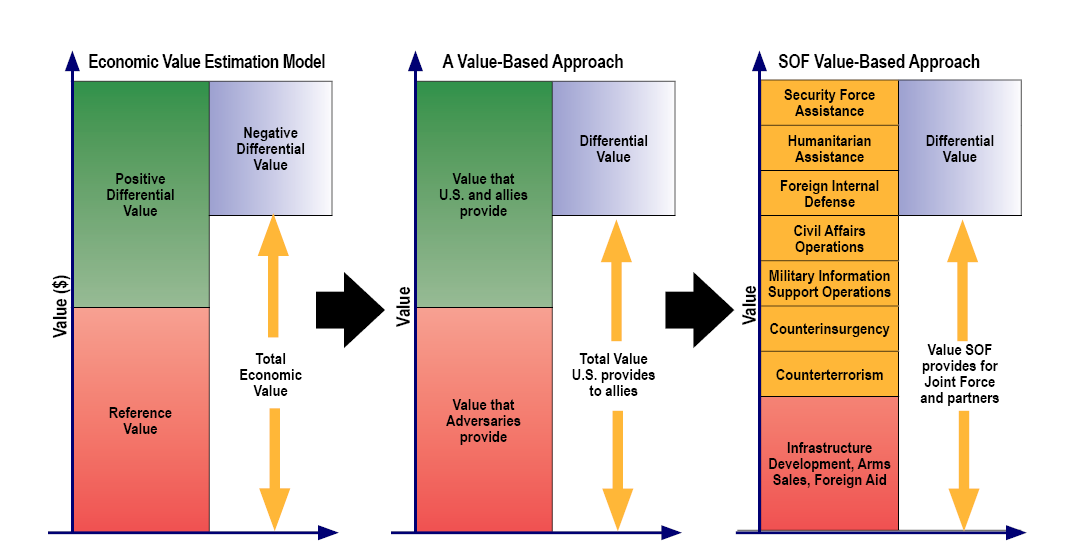
Figure 1.0: conceptual crosswalk from Economic Value Estimation and Value-based approach to strategic messaging
Inevitably, the confusion between values and interests arises regarding foreign policy. US astronauts ride alongside Russian astronauts to the International Space Station. Squaring that circle is relevant, and an entirely separate article needs to be devoted to the interests vs. values friction. However, this article uses values and interests interchangeably, arguing that shared values among the US and its allies drive mutually beneficial yet exclusive interests. The ability to wade through the cultural complexities of partner nations to seek out shared values in line with divergent political interests is a requirement best fulfilled by SOF—which introduces the idea of inimitability.
Inimitability is a business concept that describes a value created by companies that do better than the competition, which
cannot be replicated or, at the very least, challenged. Yes, other organizations within the national security enterprise can provide competitive advantages. State Department programs may have an enduring mission with partner nations but need more in-depth placement. The Army’s Security Force Assistance Brigades (SFAB) may have an enduring mission, access, and placement with partner nation security forces but lag in deep cultural understanding of a respective operational environment.
SOF gives the Joint Force a competitive advantage by being the lone organization with enduring missions, access and placement, and an intimate understanding of the operating environment. This is inimitability.
SOF’s intimate understanding of the human dimension identifies shared values of US partners
The most challenging step in implementing a value-based strategy is defining what is valuable. In creating shared values, joint and army doctrine defines value in the context of a partner nation’s culture, but it is insufficient. The best definition of value is the business sector’s analogous comparison to celestial navigation. “value is not determined by the unchanging physical aspects of a product, but by the ever-changing circumstances of the customer, just as the location of celestial points of navigation, although unchanging in the heavens, appears in different places relative to the boat at different times of the day or when sailing in different directions.” This definition should anchor the Joint Force away from the problem(s) plaguing strategic messaging, “one of the key problems is simply an inattention to audiences or attention to the wrong audiences, especially at the highest levels of government.” An analysis from a 2019 survey reported by the Times suggests that one of the reasons the US struggles to foster democracy abroad is because “they’ve [US] ignored the values and interests of those they hope to persuade.” Shared values are not defined solely through the lens of the US, but also through the view of partners and allies.
This is where Civil Affairs can play a major role in identifying shared values with allies through their understanding of the human dimension. One innovative way Civil Affairs soldiers help map the human dimension is by using a power-interest grid framework (see Figure 2.0). The power-interest grid originated to help CA officers aid commanders’ situational awareness of the cultural aspects of population centers affecting military operations. This same concept can aid the Joint Force in identifying shared values that the US can use to strengthen relations with partners and allies. Just as important, civil affairs forces can map how the needs and interests of our adversaries meet our partner's values. Developing an information campaign to convey the value of having the United States as a partner of choice over adversaries is uniquely suited for Psychological Operations (PSYOP). By shifting focus from a primarily adversary-based messaging strategy to an alliance-centric strategy, PSYOP can convey international partners' shared value with the US.
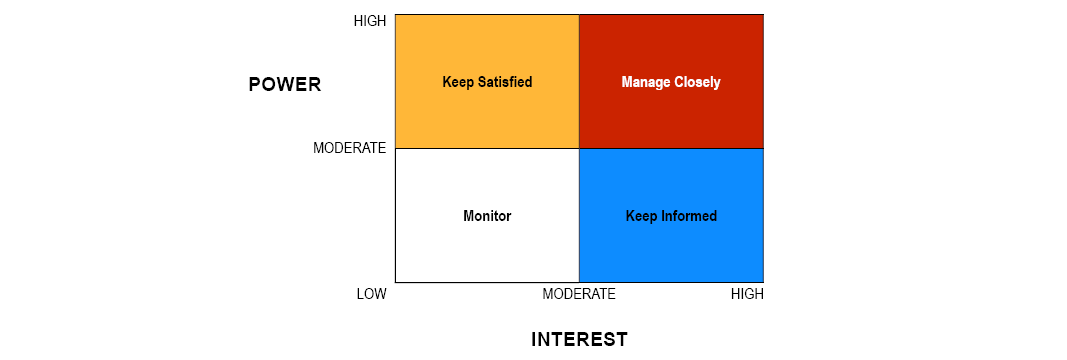
Figure 2.0: Power Interest Grid
SOF understanding of threats relative to what partners value is like understanding the market/industry.
Simon Sinek’s book, “The Infinite Game,” describes the significant differences in the heated rivalry between Apple and Microsoft in their respective marketing campaigns. Microsoft’s marketing centered around emphasizing the superiority of their products over Apple, whereas Apple’s marketing focused on their customers, “how to help teachers teach, and how to help students learn.” Apple’s messages focused on empowering their customers to be better versions of themselves, positioning their product as a “side-kick” to their customers, the center of their marketing strategy. Inversely, Microsoft positioned its products as the central figure, highlighting product specs and features with nominal regard to customers.
Similarly, for the United States to compete against its adversaries using a Westernized version of democratic values would have marginal effects. In an ever-increasing globalized, interconnected, and interdependent global community, framing victory over adversaries as a zero-sum game will invariably harm partners and allies. The Association of Southeast Asian Nations is an alliance vital to US interests in the region and is also under constant pressure from China. In a historic visit to the area in 2023, President Biden attempted to strengthen relationships with Vietnam by quelling fears of increasing US-China relations by stating, “I don’t want to contain China. I just want to make sure that we have a relationship with China that is on the up and up squared away; everybody knows what it is all about.” Whether this was a planned or an improvised statement, this line of messaging enables PSYOP, along with other Information Forces (Public Affairs) broad parameters, to shape the domestic and international community on a messaging strategy that centers around partners’ shared values with the United States. As evidence in Africa will suggest, the US remains the preferable partner of choice due to security force assistance activities executed by Special Forces elements.
SOF is the instrument of choice to become the partner of choice, generating competitive advantage
At a time on the African continent where the US is witnessing a gradual shift towards adversarial partnerships, key stakeholders still push back against China and Russia’s rising influence in their country(s). In Zambia, a year after defaulting on their credit compounded by BRI initiatives and the COVID-19 epidemic, the country voted out President Edgar Lungu in favor of Hakainde Hichilema, who ran on the platform of fostering a “better democracy, address rampant corruption, uphold the rule of law, restore order and respect human rights….” This was seen as a vote of protest against extreme unemployment and corrupt foreign investment practices from China. However, this did not stop President Hichilema from expressing his willingness to work with the United States
and China. Projecting American influence on partners who inherently share similar values makes it easier for security cooperation programs to deliver American democratic values.
When given the choice, a study in 2021 suggests that, on average, “across 34 countries, China trails the United States as Africans’ preferred development model (33% vs. 22%), followed by South Africa (12%) and former colonial powers (11%).” This preference for the United States opens doors for shared democratic norms, evident in largely successful security assistance efforts between the US and Liberia. Security Force Assistance (SFA), carried out by Special Forces elements, also “helps to inculcate a shared military identity, common skills, and communication, indirectly strengthening a third norm of cohesion.” SFA is just one of the many SOF core tasks international partners values. By combining the human dimension understanding by Civil Affairs forces with the comprehensive strategy for messaging in the information dimension by PSYOP, Special Forces can bring home all the guns and all the butter in the physical dimension, strengthening partnerships and alliances—sustaining a competitive advantage during Competition.
Conclusion
“The hardest thing for us to do is to pursue a policy that has no relationship to values at all. It won’t be sustainable.”
- Ambassador Dennis Ross, Irregular Warfare Podcast, December 2, 2022
The nature of competition on the international stage does not allow for a decisive victory the United States has come to expect. While partners and alliances benefit from strong relationships with the US, they are also heavily dependent on adversaries. As Ambassador Ross stated, executing an adversarial-focused policy with little regard for shared values among partners and allies will not be sustainable.
In this context, the beauty of a values-based strategy is that it is not about providing services that customers value; it is also about offering products/services that contain additional benefits over what the competition offers. ARSOF elements can deliver both guns and butter, creating value between the U.S. and other countries. This is getting at the heart of the 2022 National Security Strategy message—that the U.S. cannot do it alone because they do not have to. With these countries gaining highly valued services, the U.S. can form new alliances and forge lasting relationships, effectively out-competing their adversaries.
Author’s Note: Maj. Bobby Kava is a U.S. Army Psychological Operations officer currently serving at a Psychological Operations Battalion. Views/recommendations/opinions expressed in this paper are those of the author(s) and do not represent the official position of the DoD/DoW or the US Army.
Endnotes
General Bryan P. Fenton,
USSOCOM Posture Statement, Committee on Armed Services U.S. Senate, March 7, 2023, 7.
White House,
National Security Strategy, 10.
Ibid., 7.
U.S. Army,
United States Army Special Operations Command Campaign Plan 2035, 2017, 4.
Richard Youngs,
EU Global Strategy: How to Balance Interests and Values. European Union Institute for Security Studies, January 15, 2016.
Thomas T. Nagle & Georg Muller,
The Strategy and Tactics of Pricing: A guide to growing more profitably. Routledge Publishing, 6
th Edition, November 16, 2017, 28.
Nagle & Muller,
The Strategy and Tactics of Pricing, 26.
Gene E. Bigler,
Strategic Communications and the Decline of US Soft Power. International Law Studies, Volume 83, March 06, 2015, 220.
Ian Bremmer,
Why the World Wants Democracy but Not Necessarily the American Version. Time Magazine, May 16, 2019.
Lieutenant Colonel Alexander L. Carter,
Civil Affairs’ Capability to Provide Improved Situational Awareness in Population-Centric Operations. Eunomia Journal, Civil Affairs Association. June 15, 2020.
reBella,
simon sinek: the infinite game – microsoft versus apple. October 4, 2020. Youtube, 2:21.
Caitlin Yilek,
Biden calls for stability in US-China relationship: “I don’t want to contain China.” CBS News, September 10, 2023. https://www.cbsnews.com/news/biden-press-conference-china-vietnam/.
Katongo Seyuba,
The Zambian 2021 general elections overview. African Accord, August 25, 2021. https://www.accord.org.za/analysis/the-zambian-2021-general-elections-overview/
Josephine Sanny and Edem Selormey,
Africans welcome China’s influence but maintain democratic aspirations. Afrobarometer No. 489, November 15, 2021.
Renanah Joyce,
Soldiers Dilemma: Foreign Military Training and Liberal Norm Conflict. International Security Vol. 46, No. 4, pp. 48-90. April 1, 2022, 50.
Irregular Warfare Podcast,
Transmitting Values: Can US Security Force Assistance Export Democratic Norms? Irregular Warfare Initiative, United States Military Academy, NY. December 2, 2022. https://podcasts.apple.com/us/podcast/transmitting-values-can-us-security-force-assistance/id1514636385?i=1000588485221