Lessons from the Front: The Ukraine SOF Tactical Group
The war in Ukraine has re-energized the United States Army Special Operations Command (USASOC) to prepare for large scale combat operations (LSCO) in the 21
st century. One of the key lessons from this conflict is the success of Ukrainian special operations forces (SOF) employing multi-domain assets to disrupt the Russian military.
Ukrainian SOF have successfully operated as independent SOF tactical groups with attached multi-domain fighting elements specializing in unmanned aerial systems (UAS), counter UAS, electromagnetic warfare (EW), air defense, intelligence and logistics. These SOF tactical groups have successfully integrated alongside conventional forces in key operations including the 2023 defense of Bakhmut and the 2024-2025 Kursk offensive.
To replicate this success, U.S. Army SOF should modernize how they employ an often-overlooked echelon, the Special Forces company headquarters, or Special Forces Operational Detachment Bravo (SFOD-B) which is uniquely suited to command and control (C2) a Ukrainian-style SOF tactical group.
Background: The Overlooked SOF Echelon
By doctrine and Global War on Terrorism (GWOT) experience, the Special Forces company headquarters took a backseat as the primary unit of action. The 12-man Special Forces Operational Detachment Alpha (SFOD-A) often reported directly to a battalion level Special Forces Operational Detachment Charlie (SFOD-C). Even updated Special Forces doctrine with renewed emphasis on LSCO, has little to add regarding how an SFOD-B fights on the modern battlefield. Instead, Army doctrine states that the SFOD-B should focus on being a liaison to a conventional headquarters, advising a brigade partner force, or supporting SFOD-As logistically through a forward operating base. This limited mission set overlooks potential offensive tasks that a company-size element can execute to achieve the same success as Ukrainian SOF tactical groups
The SFOD-B has also been disadvantaged by personnel readiness and institutional knowledge. Special Forces majors typically only serve one year in command, while the rest of the headquarters section rarely has anyone there for more than a year. Soldiers assigned to the SFOD-B are typically just in limbo waiting to join a team or depart for their next assignment. Most Green Berets join the Regiment to be on the SFOD-A, not the “B Team”. Combined, these factors contribute to rapid turnover which makes it hard to consolidate any tactics, techniques, and procedures as a fighting formation.
While doctrine, experience, and personnel challenges currently limit the SFOD-B, it is still uniquely suited to lead the Ukrainian-style SOF tactical group due to its survivability and C2 capabilities. Along the spectrum of Special Forces tactical units, the SFOD-A is the most maneuverable and survivable. This makes the SFOD-A the ideal unit of action capable of sensing and delivering effects in places denied to conventional forces—the deep area (or enemy rear area). However, to survive in the deep area, the SFOD-A must be unencumbered by too many attachments and reporting requirements.
On the other end of the spectrum is the SFOD-C, which is typically not mobile but has a full staff with increased C2 capability. The SFOD-C is, therefore, most likely to operate in the friendly rear area and focus on coordinating up and out with the rest of the joint force.
Between the SFOD-C and SFOD-A is the SFOD-B, which is more mobile and survivable than the SFOD-C and can manage more C2 capabilities than the SFOD-A. With this sweet spot between mobility and C2 capability the SFOD-B is ideal to operate as a forward headquarters in the deep area to directly support SFOD-As with conventional assets, similar to the Ukrainian SOF tactical group.
The Modernized SFOD-B
Given its balance of mobility and C2 capability, the SFOD-B should be empowered to lead a US version of the SOF tactical group that supports its SFOD-As. In this modernized model, shown in Figure 1 below, the SFOD-B would have operational control (OPCON) of its organic SFOD-As; additional UAS and CUAS capabilities; EW units such as Special Operations Teams Alpha (SOT-A); Civil Affairs, and Psychological Operations teams; and organic fires assets made primarily of longer-range kinetic drones. Concentrating these assets at the SFOD-B would free up the SFOD-As to increase their survivability, but also keep them close enough in the deep area that they could be quickly attached down to the SFOD-As as needed.
Under the Ukrainian model, the SFOD-B led tactical group could concentrate multi-domain assets with the SFOD-As at decisive points in a similar manner to the rest of the joint force. To account for LSCO against a peer adversary, the services plan combat power pulses during critical times as opposed to the ubiquitous support common during GWOT. These pulses maximize mutually supporting multi-domain effects while minimizing the exposure of units in the attack. An SFOD-B operating in the deep area can support pulses with their own organic and attached units, such as SOT-As, to disrupt the enemy through air defense raids, sabotage, and ambushes.
The SOF tactical group concept synchronizes the tasks of each Special Forces echelon. The SFOD-A remains the primary unit of action, focused on sensing and conducting direct missions against the enemy. The SFOD-B provides logistics and combat support with attached assets. The SFOD-C is an up and out command that coordinates SOF actions with the higher SOF headquarters and the rest of the joint force. Vital to the success of these echelons is operating with and through indigenous partners to force multiply and increase their own survivability.
In addition to coordinating attached offensive capabilities, the SFOD-B is best suited to coordinate logistics support into and out of the deep area. The war in Ukraine has demonstrated that sustainment operations throughout the battlespace can and will be targeted. Therefore, the movement of personnel, repair parts, ammunition, and other supplies must be executed as deliberate tactical operations requiring a full suite of defensive counter measures. With the SFOD-C operating in the friendly rear area as the logistics pusher, the modernized SFOD-B can employ its attached multi-domain assets to protect logistics packages moving within an area of operations.
Figure 1. Proposed SOF Tactical Group Task Organization. Headquartered by a SFOD-B, the tactical group includes the organic six SFOD-As anddetachments for UAS, electromagnetic warfare, civil affairs, psychological operations, air defense, transportation, and maintenance.
The SFOD-B is also uniquely organized to manage a broader span of control than a conventional infantry headquarters. By doctrine, each SFOD-B consists of a senior Green Beret from each Special Forces military occupational specialty: weapons, engineering, medical, communications, and intelligence, each capable of leading a separate company sized element. This allows each SFOD-B Special Forces noncommissioned officer to lead attached enablers corresponding to a like specialty. For example, the Special Forces weapons sergeant would coordinate with air defense and fires sections, the engineer sergeant would coordinate with logistics units, and the medical sergeant would coordinate prolonged filed care.
To manage both the logistic and effects requirements, the modernized SFOD-B will operate in a specialized operational framework to synchronize its efforts in the battle space. Figure 2 below depicts a proposed modernized SFOD-B operational framework. The SFOD-B’s operating area would likely be within the friendly deep area. The SFOD-B’s rear area would be a relatively safe region in the deep, protected by friendly indigenous forces in rural, mountainous, or subterranean areas. The rear area would also include unconventional supply routes across, over, and under front lines.
The SFOD-As would operate in the SFOD-B close area by conducting offensive operations, such as suppression of enemy air defenses raids. The SFOD-B deep area would be further into the enemy’s rear area where long-range UAS and EW effects can disrupt enemy C2 and logistics to set conditions for the SFOD-As. Allowing the SFOD-B to own a portion of the deep area would increase overall situational awareness, freeing up SFOD-As to focus on sharp offensive actions and survivability, while the SFOD-C could then focus on broader planning initiatives from the rear area.
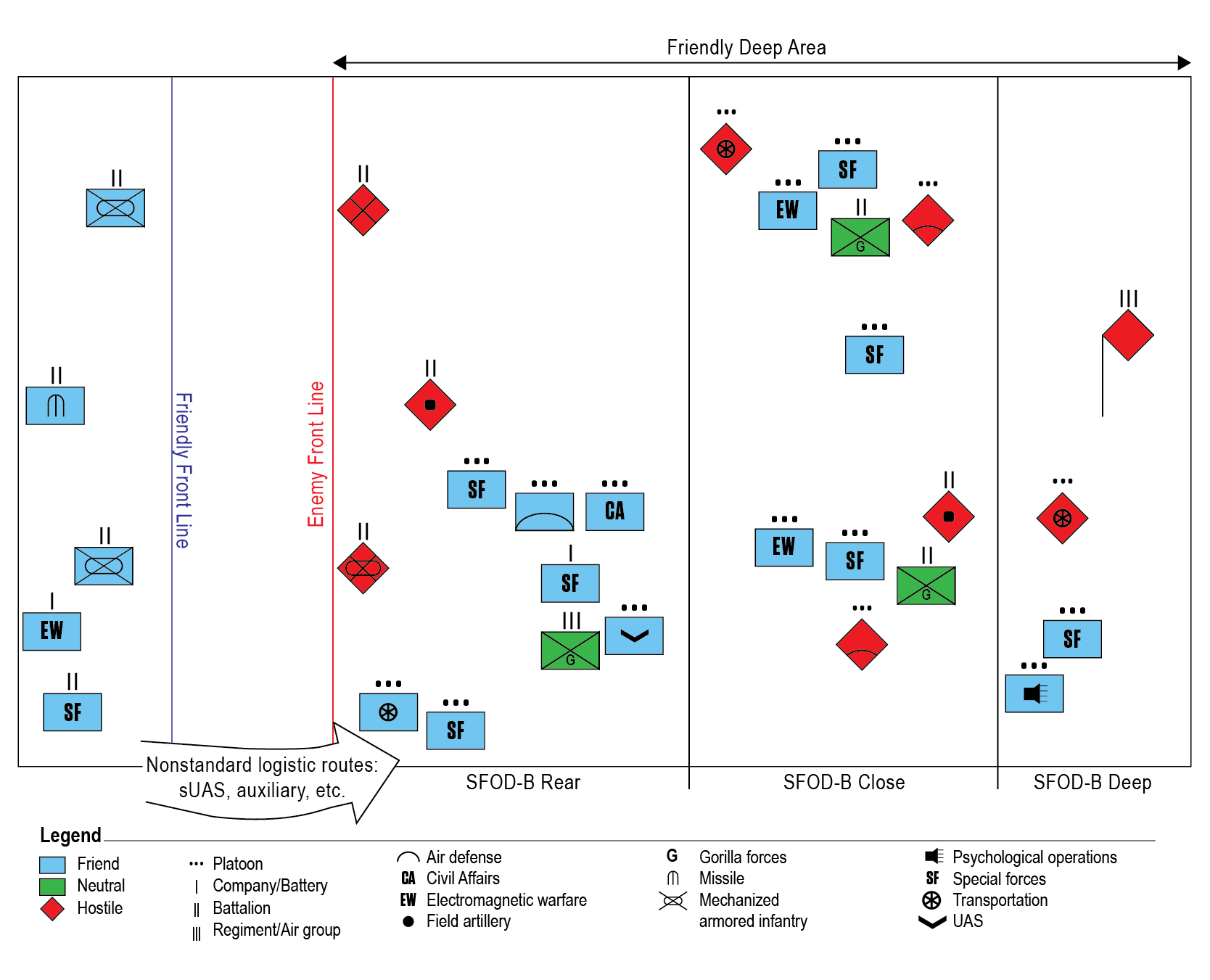 Figure 2. Modernized SFOD-B Operational Framework.
 The SFOD-B commands and controls SFOD-As and enablers to disrupt the enemy in the friendly deep area (enemy rear) while managing nonstandard resupply across enemy lines.
Based on successful Ukraine SOF actions, USASOC should develop and test a modernized SFOD-B leading a Ukrainian-style SOF tactical group. Multi-domain assets organic to the group should be considered company level troops and begin integrating with SFOD-B training cycles. Next, SFOD-B led battle groups should be tested fighting with and against Army brigades and divisions at combat training centers. Lessons from these training rotations should then inform updated doctrine to codify how the SOF tactical group operates. Additionally, the Regiment should consider allowing majors two years in company command to increase continuity and cement standard operating procedures. Ukraine SOF Tactical Groups provide a useful model for how US SOF should prepare for LSCO by empowering the often-neglected SFOD-B.
Authors’ Note: Major Mark Thomas has experience within Special Forces groups and is currently assigned to USASOC. Sergeant Major Steven Lim is currently assigned to USASOC and has worked within Special Forces groups. Chief Warrant Officer Stephen Bennie is currently assigned to USASOC and has also worked within Special Forces groups. Views/recommendations/opinions expressed in this paper are those of the author(s) and do not represent the official position of the DoD/DoW or the US Army.